
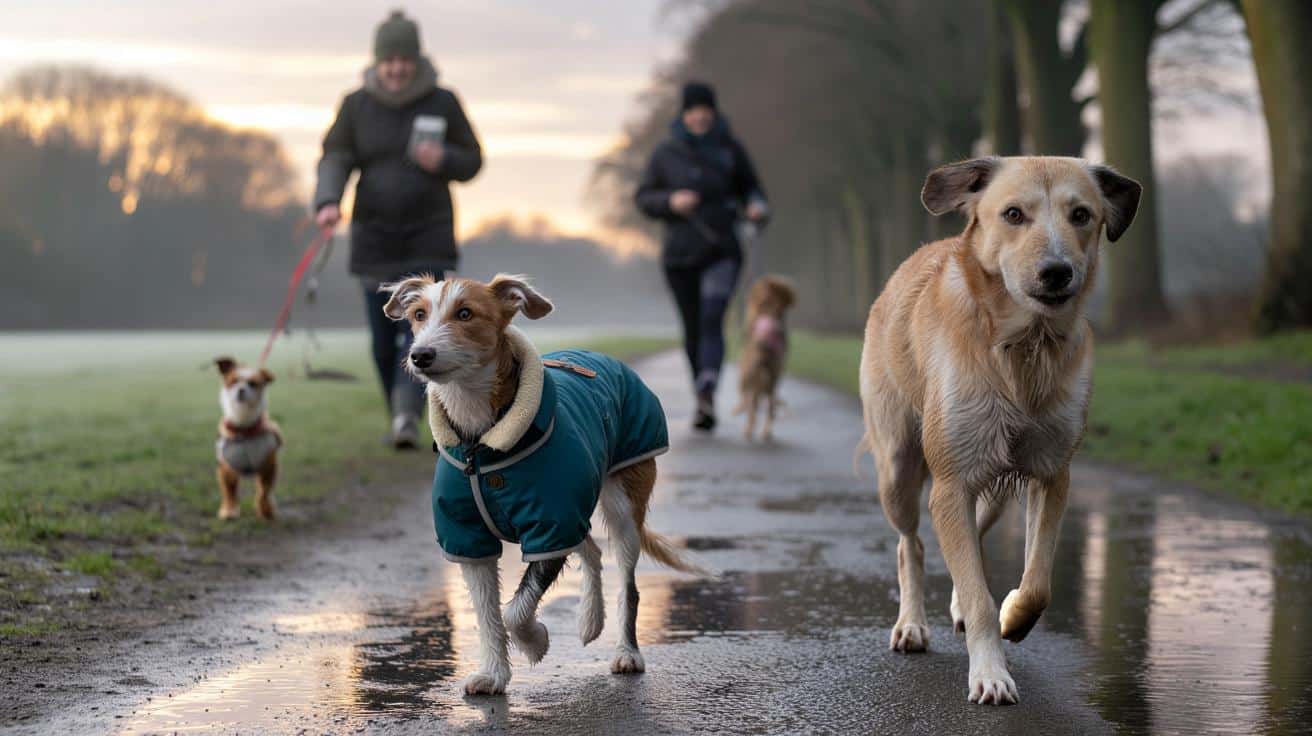
Frosty mornings split parks into two camps: the puffer-jacket pups and the bare-fur purists. A practising vet lays down a simple, evidence-led rule that finally settles the winter-walk coat debate — with nuance, not noise.
In the low, pearly light, you could clock the split: tiny dachshunds zipped into quilted gilets, stoic Labradors bare as the day they were born. A woman in a bobble hat whispered to me, half-guilty, “Is this silly or life-saving?” Her terrier trembled like a phone on vibrate. A jogger zoomed past, his whippet in a racing vest that flapped like a kite. A kid pointed at a bulldog in a tartan parka and laughed, then shivered himself. We’re all guessing, aren’t we? What’s cosy, what’s overkill, what’s just Instagram fluff. I watched a spaniel tuck his tail, lift one paw, then the next. That quiet, universal sign of “I’m cold”. The answer to coats is not a meme. It’s a checklist. It depends — precisely.
The vet’s verdict: which dogs truly need a coat, and when
Here’s the clean rule from veterinary practice: match the dog to the weather, not the trend. Think coat type, size, age, body condition, health, wind and wet, and how long you’ll be out. **Small, short‑haired, elderly and underweight dogs benefit most from a winter coat.** Many do well without one on a brisk 10‑minute loop at 8°C. Drop it towards 5°C, add drizzle or a biting breeze, and the equation shifts fast. The place that loses heat quickest isn’t the back — it’s the chest and belly, where many dogs have thin fur. Protect the core, and you protect the dog.
Picture a typical UK Saturday: 4°C on the forecast, a stiff wind rolling off the canal, pavements slick with rain. That 4 can feel like 0 on skin and fur. I met a whippet called Runa last winter, wrapped in a fleece that hugged her like a second skin. The week before, bare, she shook like a leaf and tried to climb her human’s leg. With the coat, she trotted, head up, tail loose, no paw‑lifting ballet. Owners often say the difference is night and day. Not fashion. Function.
Physiology backs the feeling. Lean, low‑fat breeds don’t have the insulation that a chunky retriever carries. Short coats don’t trap warm air the way double coats do. Seniors and dogs with thyroid or heart issues run cooler; arthritis flares when muscles are tense from shivering. And wet fur is a thief. The moment drizzle soaks through, heat conducts out. **Wet and wind steal heat faster than you think.** A coat that keeps the chest dry and blocks wind buys comfort, stamina and safer joints across a standard winter walk.
How to pick and fit a winter dog coat (so it actually works)
Start simple: measure nose-to-tail base, neck, and the deepest part of the chest. Choose a coat that covers from shoulder to the base of the tail, with wraparound belly or chest panels. A high collar or low neckline that shields the brisket beats a cape that just blankets the back. Look for a harness portal that sits where your hardware does, not halfway up the shoulders. Aim for snug — the two‑finger rule around neck and girth — and free shoulder movement. *Fit matters more than fluff.* If your dog can sit, spin and stretch without a rub, you’re there.
Materials matter. A windproof outer with a soft, insulating lining hits the sweet spot for most British days. Fleece alone is cosy on dry, still mornings; pair it with a shell in sleety wind. If the coat is wet, swap it. A soggy layer chills like a cold towel. Watch for chafing at the armpits and chest buckles that sit on bone. If the sun breaks out mid‑walk and your dog starts panting hard or ditching the pace, pop the coat off and carry it. Let’s be honest: nobody really does that every day. Try it on the days that bite.
Think routine, not ritual. Put the coat on right before you leave, and take it off the moment you step back in, so skin can breathe and fur can dry. Trim long belly fur that mats under straps. Rinse road salt off hems just like you would paws. If your dog hates the process, pair the coat with a favourite treat and a 30‑second calm rub‑down, then go.
“The goal isn’t warmth at all costs. It’s comfort, movement and safety in the conditions you actually face,” says a London vet. “If a coat turns a shivery walk into a confident one, use it. If your husky is sprinting in sleet, the best coat may be none — and a towel waiting at home.”
- Quick check before you step out: temp, wind, wet, duration, dog’s coat/age/health.
- Core coverage beats fashion frills. Chest and belly panels win.
- Dry is non‑negotiable. Swap a soaked coat, and towel the fur underneath.
- Freedom first: no tight shoulders, no slipping straps, no dangling bits.
- Reflective trim helps on dark pavements. Safety is also visibility.
What this debate really says about how we care for dogs
Coats tap into something bigger than kit. They’re about how we read the animal in front of us, not the comments under a photo. We’ve all had that moment when a dog looks up and tells you everything with one shiver. That’s not costume. That’s communication. The culture war — tough dogs vs. pampered pets — melts in the rain.
Britain’s winter is messy. Cold snaps, sideways rain, damp that gets into bones. On some days, a coat is a bridge to joy, letting a shy rescue try the long loop, or an old collie keep her rhythm without guarding sore hips. On others, it’s a backpack your dog didn’t ask for. Read the day. Read the dog. **A smart walk is an adaptable walk.** Share what worked on your street, your moor, your canal path. There’s wisdom in the local weather, and in your leash hand.
If this debate has a single takeaway, it’s less about rules and more about response. Watch for the small signals — the tucked tail, the tense back, the paw that lifts and waits. Swap the gadget, change the route, cut it short, or lean into play and warmth. Winter will throw curveballs. You’ll throw back the right kit and kinder timing. That’s the only trend that sticks.
| Point clé | Détail | Intérêt pour le lecteur |
|---|---|---|
| Who needs a coat | Small, short‑haired, senior, underweight or unwell dogs benefit most below ~5–7°C, especially with wind or wet | Quickly decide for your dog on a given day |
| What to buy | Windproof shell, insulating lining, chest/belly coverage, harness portal, reflective trim | Spend once on kit that actually works |
| How to use it | Snug fit with free shoulders; keep it dry; remove during intense play or sunshine bursts | Maximise comfort and avoid overheating or chafing |
FAQ :
- Do all dogs need a coat in winter?No. Many medium and large double‑coated breeds do fine on short walks in mild cold. Lean, short‑haired, senior or unwell dogs often need one once temps dip and wind or wet arrive.
- What temperature should trigger a coat?As a guide, consider it for at‑risk dogs around 7°C, and for many dogs near 0–3°C, especially if it’s windy or raining. Duration and activity level change the call.
- Can a coat cause overheating?Yes, during sprints or sunshine. Use the coat for the chilly bits, then take it off. Panting hard, slowing down, or trying to shake it off are your cues.
- Do double‑coated breeds ever need one?Sometimes. In sleet, high wind, or long, slow walks where they’re not generating heat, a light, water‑resistant layer can keep the chest dry and stop energy drain.
- Is rain more of a problem than dry cold?Often, yes. Wet fur conducts heat away fast, and wind compounds it. A dry, wind‑blocking coat keeps the core warm so the walk stays fun and safe.






Finally, a clear, evidence-based answer—thank you! I’ve been stuck between “cute” and “overkill” on every frosty walk.