
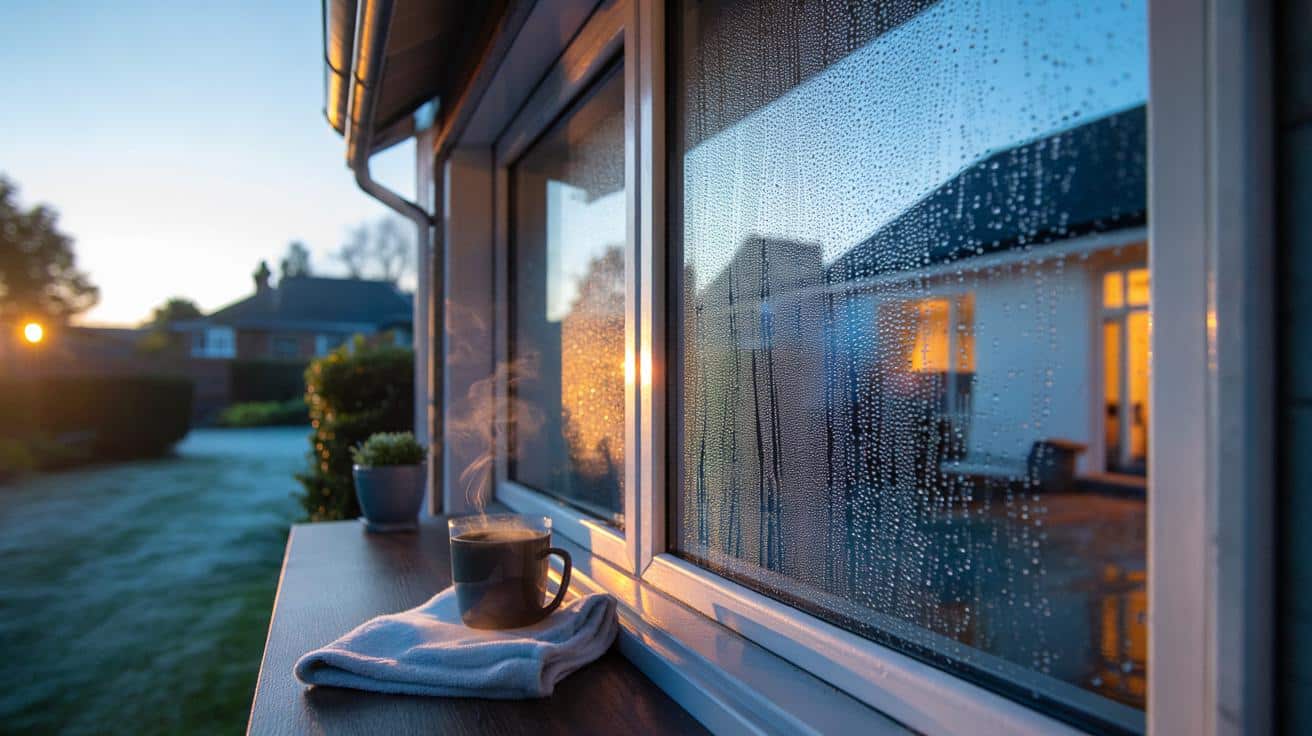
It looks wrong. Inside is dry, the frames are spotless, yet the glass outdoors glitters as if it rained just on the pane. You rub a finger on the other side of the glass out of habit, then stop and stare. Is your house somehow leaking heat? Or is your new glazing failing? One small mystery on a chilly morning, and your coffee cools while you try to read the clues in the droplets.
The kettle clicks off, a gull stutters overhead, and a neighbour’s porch light blinks. It’s the kind of scene you notice only when something feels off, like a riddle you didn’t know your house could ask. The outside of your windows is wet, not the inside. A tiny weather system, right on your glass. You wonder if this is a problem, a perk, or a warning. The answer is slippery.
Why water forms outside your windows in the first place
Step back and think of your window as a patch of night sky on your wall. On a clear night, the outer pane radiates heat towards that cold, open dome. It cools faster than the air around it, sometimes dipping below the dew point. The moment the glass is cooler than the surrounding air can hold as vapour, moisture condenses into visible droplets. If the air is still and damp, those beads gather fast and stay until sun or breeze breaks them apart. It’s nothing more mysterious than dew, made personal.
One homeowner in Manchester told me her new A-rated double glazing looked “like it rained on the windows but not on the garden”. She wasn’t wrong. Clear autumn mornings, high humidity after a mild day, and a night with little wind can turn glass into a canvas for dew. In parts of the UK, relative humidity often hangs around 80% at dawn, which is plenty for beads to bloom when the pane runs cool. The same weather that makes your car mist up will do it to your glass, only more neatly along the edges.
Here’s the twist. Older, leakier windows were warmed slightly from indoors, so their outer panes often stayed just above the dew point and looked dry. Modern low‑emissivity coatings and insulated units keep indoor heat inside, so the outer pane sits closer to the outdoor temperature and can fall under the dew point at night. **External condensation is often a sign of good insulation, not bad.** What you don’t want is moisture between the panes—that usually means a failed seal—or persistent moisture on the inside, which points to indoor humidity issues. Different faces of the same glass, different stories.
Smart ways to reduce external condensation without fighting the weather
If the morning veil bothers you, think about changing how the glass “sees” the sky. An awning, a slim canopy, or even deeper eaves can reduce radiative heat loss from the pane to the night sky. Some homeowners use a clear, breathable exterior screen on problem windows to break dew into smaller droplets that clear faster. There are also specialist anti‑condensation coatings for the outside surface that encourage water to sheet off rather than bead. A quick early wipe with a soft microfibre also works when you’ve got view‑critical panes by the patio.
Let’s be honest: nobody really does that every day. So go for set‑and‑forget tweaks. Keep shrubs and hedges near ground‑floor windows trimmed to allow a little airflow at dawn. Angle trickle vents open at night on rooms facing dew‑heavy gardens so the air round the glass moves when morning comes. Park cars a touch further from panes where you can, since big metal surfaces cool the air next to the glass. And if you love a curtain‑tight bedroom, consider Venetian blinds set slightly ajar so first light and a thread of air can help burn the moisture off.
Here’s where people get tripped up. Cranking up the heating rarely changes outside condensation in any meaningful way, because the outer pane sits with the weather, not your thermostat. A dehumidifier in the lounge won’t touch the droplets outside. **Don’t reach for a hairdryer outdoors or a scraper on a sealed unit.** You’ll just stress the glass and risk damage. If the look drives you mad, a hydrophilic coating can be a middle path; it spreads the water into a transparent film that dries faster and looks cleaner in the meantime.
“External condensation is the window telling you it’s doing its job. Save your worry for moisture inside or between the panes.”
- Choose an anti‑condensation or hydrophilic exterior coating for dew‑prone panes.
- Add a slim canopy or awning above ground‑floor windows facing open sky.
- Encourage gentle morning airflow: crack trickle vents, angle blinds, trim shrubs.
- Accept the badge: on many new windows, dew at dawn fades within an hour of light.
- If droplets linger past midday on cold, still days, try a quick microfibre wipe and move on.
When to worry, when to smile, and what your glass is trying to tell you
We’ve all had that moment when a little household quirk spirals into a 3 a.m. Google search. External condensation isn’t that kind of story. It usually means your low‑E coating and warm‑edge spacers are working, keeping the chill outside and your heat in. Watch for patterns instead. If moisture sits inside the room on winter mornings, check indoor humidity and ventilation. If a milky haze or droplets live between the panes, that’s a failed seal and time to talk to your installer. Most days, though, the show on the outside is simply weather, briefly borrowed by your glass. **Let the sun and a light breeze do their quiet work.**
| Point clé | Détail | Intérêt pour le lecteur |
|---|---|---|
| External dew = efficient glazing | Modern low‑E units keep heat in, so the outer pane cools to the dew point | Reassurance that beads outside aren’t a fault |
| Red flags to note | Moisture inside the room or between panes signals humidity issues or failed seals | Know when to act rather than worry |
| Practical tweaks | Awnings, coatings, and morning airflow reduce visible droplets | Simple, low‑effort ways to improve the view |
FAQ :
- Is condensation on the outside of my windows bad?Usually no. It’s a common sign of well‑insulated, energy‑efficient glazing on cool, still mornings.
- What’s the difference between outside, inside, and between‑pane condensation?Outside = weather and a cool outer pane. Inside = high indoor humidity or poor ventilation. Between panes = failed seal that needs repair or replacement.
- How can I reduce outside condensation without replacing windows?Add a slim canopy or awning, use a hydrophilic exterior coating, encourage light morning airflow with vents or angled blinds, and trim nearby shrubs.
- Does turning up the heating help clear droplets outside?Not really. The outer pane follows outdoor conditions, so indoor heat seldom changes outside condensation.
- Will this water damage my frames or glass?On modern units with proper drainage and finishes, no. If you see persistent pooling on sills or staining, clean the weep holes and check seals.







So external condensation is a good sign now? Sounds a bit like marketing from window makers, tbh. Any independent data on low‑E units showing this efect?
This finally explains my “rained‑on‑but‑not‑really” mornings. The night‑sky radiation bit was super clear and oddly poetic. Bookmarked—thx for the plain‑English science.