
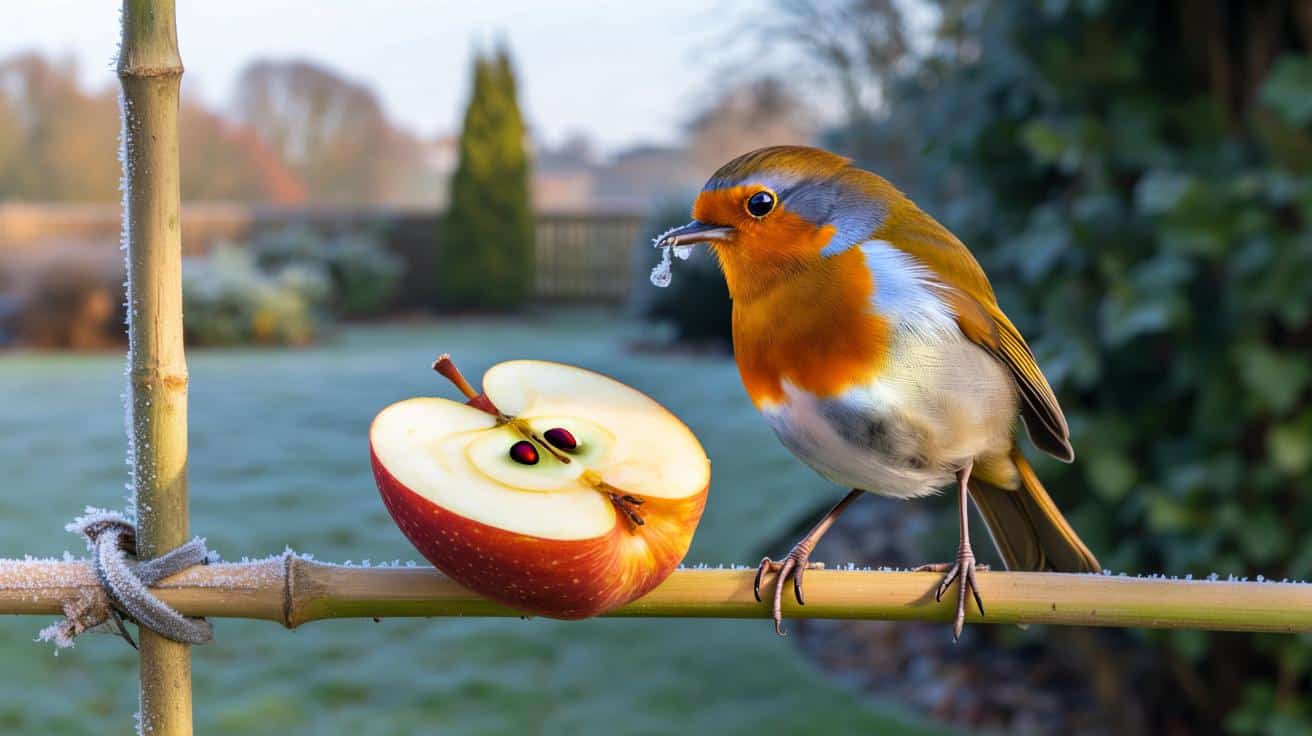
Berries thin, slugs hide, and the birds move differently — slower, more deliberate, closer to the ground. Robins will keep returning to your garden if you place 1 fruit outside in November. It sounds almost too simple, yet it works.
It began on a frosty morning, the kind that makes the washing line shimmer like a string of tiny icicles. A robin dropped onto the fence post, head cocked, bold as a button. I’d pushed half an apple onto a twig near the compost, mostly because it was there and I was late for work, and why not.
The bird came back the next day. And the next. I started to realise I’d become part of its map, a landmark pinned to a small red heart with a white breast. We’ve all had that moment when… a wild thing looks at you and decides to stay a second longer. You can feel the decision. Then it clicks: this is a ritual, not a fluke.
Why one apple in November works
November is the lean month for small garden birds. Insects dive deep, soft-bodied prey vanishes, and short days shrink the feeding window. A single apple gives quick sugars and moisture with very little effort.
Robins are fiercely territorial and astonishingly faithful to places that pay out. Put food in the same spot and your garden becomes a safe ATM on their winter route. **One apple, same place, same time: that’s the whole trick.** The rhythm matters as much as the fruit.
You can see it play out within a week. A neighbour in Leeds spiked half an apple on a cane at 7.30am for six mornings straight; by day four, a robin was waiting before sunrise. A robin weighs around 16–22 grams and can need up to a third of its body weight in food through cold snaps. That apple isn’t a banquet, but it’s a reliable jolt of energy that sets the day rolling.
The logic is simple. Predictable food reduces exposure to predators because the bird spends less time searching. That fixed perch becomes a known stage with known exits. Scent from a cut apple carries lightly in cold air, and the juicy flesh is soft enough for a fine beak. A little colour, a little sugar, a little trust.
The one-apple method, step by step
Pick a fresh eating apple — not a cooker — and give it a quick rinse. Slice it cleanly in half, scoop out the pips, and push the flat face onto a twig, bamboo cane, or feeder spike about chest height. Place it near a shrub or ivy screen so the robin can dive for cover.
Do it at roughly the same time each day for a week. Early morning is gold. Replace the apple before it turns mushy, especially after rain. Keep that perch still and that view open. **Consistency beats quantity.** A single tidy offering beats a random scatter of scraps.
Many people overthink it. They move the fruit each day, or set it on the ground where cats lurk, or put out a whole bag expecting a bird buffet. Let’s be honest: nobody really does that every day. Aim for one apple, one place, most days — and skip days won’t break the spell.
“It’s not bribery, it’s reliability. Birds pattern the world by what stays the same.”
Try this mini checklist the first week:
- Half an apple, seeds removed, cut face exposed.
- Perch at 0.8–1.2m high, within a hop of cover.
- Same place, same time, five mornings in a row.
- Swap to a fresh half when the edges dull.
- Keep it away from feeders crowded by larger birds.
What this tiny ritual gives back
A robin that trusts your space will return. You’ll notice the micro-gestures: the wing flicks, the minute tail tremor before it drops to feed. *It feels like a small promise kept.*
Your garden starts to feel different when a regular comes through. The cold seems less sharp, the day less grey. **A quiet routine with a wild neighbour can anchor a whole season.** You’ll think in apples and light, not just in errands and clocks.
The apple is the gateway. In time, you can add a little dish of live or dried mealworms, soaked sultanas, or a crumb of high-energy suet. Rotate the perch now and then to keep surfaces clean. The bird will keep coming for the feeling of safety as much as the food.
| Point clé | Détail | Intérêt pour le lecteur |
|---|---|---|
| Fruit unique | Half a fresh eating apple, seeds removed | Simple, affordable, quick to set up |
| Timing régulier | Place it at the same time each morning | Builds trust and repeat visits |
| Perchoir sûr | Chest-height spike near cover, clear view | Reduces predation risk and stress |
FAQ :
- Which fruit works best for robins in November?Half an eating apple is ideal. Soft pears can work too, but apples hold texture longer in cold and wet.
- Are apple seeds harmful to birds?Apple pips contain traces of cyanogenic compounds, so it’s safer to remove them. It takes seconds and avoids any risk.
- Will an apple attract rats or wasps?In chilly November, wasps are scarce. To deter rodents, place the apple elevated on a spike and clear leftovers at dusk.
- What time of day should I put it out?Early morning aligns with the first feeding burst when energy is lowest after the night. Pick a time you can repeat.
- What else can I offer alongside apple?Mealworms (live or soaked dried), small suet crumbs, and soaked sultanas are great. Skip bread and salty foods.







Followed this last week—half an apple on a bamboo cane at 7:15, same spot. By day 3 a robin was waiting in the hedge, and now it swoops in before I’ve put the kettle on. The routine is definately the trick; when I moved it once, visits dropped. Lovely, simple ritual.
Is one apple really enough? It’s quick sugar but low protein. In harsher snaps, wouldn’t mealworms be safer nutritionally? Also, could regular handouts ramp up territorial behavour and stress around that perch?