
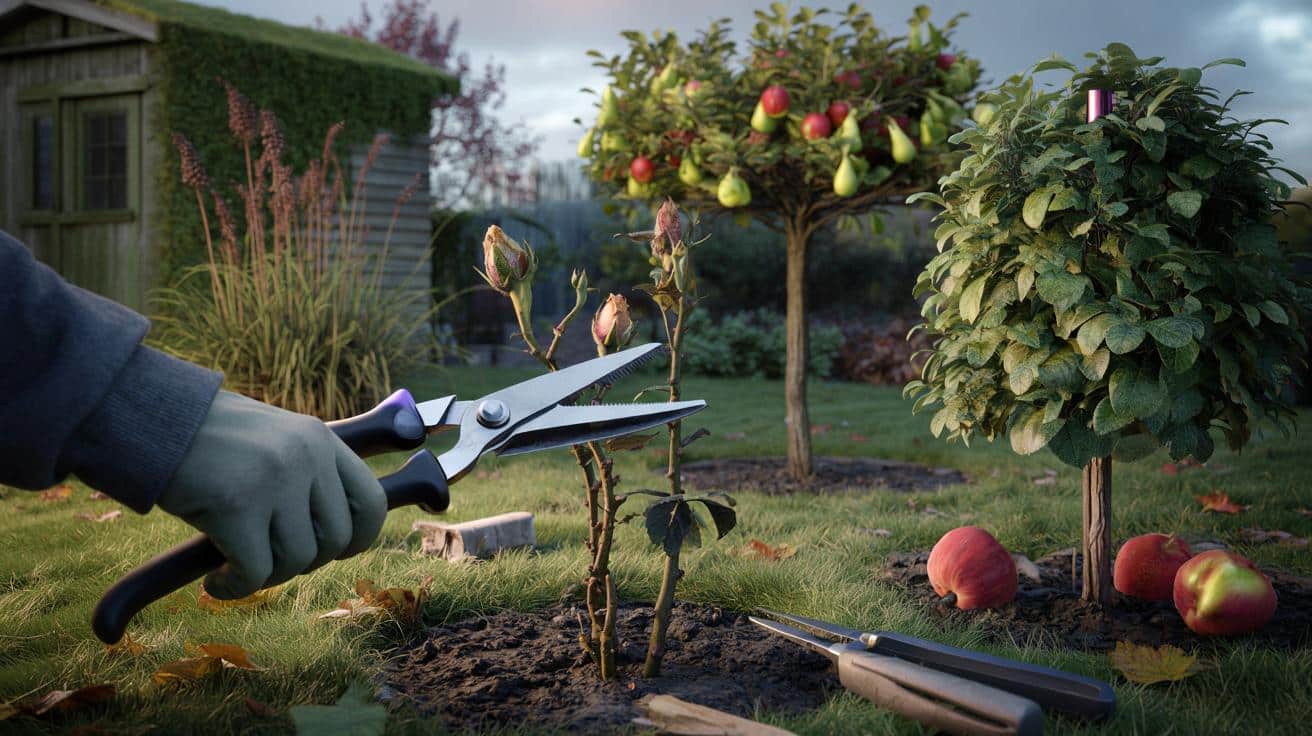
In gardens across Britain, tall stems whip in the wind, roses rock at their roots, and vines hold last year’s tangle like a secret. We’ve all had that moment when you spot a plant leaning after a gale and wish you’d cut it back last week. Five plants ask for the secateurs now. Leave them, and winter takes the lead.
I walked the garden at half four, that strange halfway light when fences turn to silhouettes and the kettle has already boiled twice. The buddleia leaned like a tall teenager against the shed, painting the siding green where it rubbed. The grapevine, stripped of leaves, showed its bones. Apples clung, bright as coins against the gloom, and the roses barged at my coat like dogs eager for a walk.
Some jobs belong to this month or not at all. *The clock on the garden year is louder in November.*
Five plants begging for a November trim
Start with roses. Not the grand winter prune yet, just a tidy that saves them from wind-rock and broken canes. Reduce leggy growth by a third, nip off tattered tips, and tie in anything that snags a sleeve. You’ll feel the difference straight away: less whip, more calm. It’s a small, almost polite haircut, and it helps them ride out the messy weeks ahead.
Then there’s buddleia, the butterfly magnet that loves to misbehave. Left tall, it sails like a mast in every gale, rocking the roots and snapping low stems. Cut back by a third to a half and it stops arguing with the wind. Main surgery comes in spring; November is the seatbelt stage. You can hear the shed sigh when the long wands come off.
Fruitwise, three old reliables call for action: apples and pears for shape while they’re asleep, blackcurrants to refresh next year’s crop, and grapevines before the sap wakes and bleeds. Apples and pears want clear centres and well-spaced limbs. Blackcurrants fruit on one-year-old wood, so you remove the elderly stems at the base. Grapevines are pure timing: cut late and they weep. **Cut grapevines before the sap rises, or they bleed.**
How to prune them, plant by plant
Roses first. With secateurs sharp enough to shave a page, take shrub roses down by a third, making each cut above an outward-facing bud. Remove any thin, whippy pieces that lash in the wind, plus dead or black-spotted bits. Climbers get a tidy too: tie long canes to their supports in gentle arcs, and shorten laterals to about two or three buds. Sweep up fallen leaves to reduce disease. Small, steady cuts beat heroic ones in a stormy month.
For buddleia, stand back and read the plant like a map. Pick the longest vertical whips and shorten them by a third to a half, cutting to a strong side shoot. Take out any dead or rubbed wood now, then stop. The hard cutdown to a low framework belongs to March. Right now is about preventing wind rock and keeping sightlines clean. Let light back into the base; your spring self will thank your November self.
Apples and pears ask for quiet logic. Aim for a balanced, open crown, like a goblet. Remove crossing branches that scrape and any growth heading straight into the centre. Shorten leaders by a third to an outward bud, and keep the best 3–5 main limbs at good angles. Blackcurrants? Spot the oldest, darkest stems and cut a third of them to the ground to trigger vigorous new shoots. Grapevines are a dance of spurs: follow last summer’s shoots back to the main rod and cut each to one or two buds. **Never winter-prune plums and cherries.**
Common mistakes, quiet fixes
Take less than you think, then step back and look again. For apples and pears, limit yourself to about a quarter of the canopy in one season. Make cuts clean and close, without leaving stubs. For roses, target the wobble and the whip rather than the whole plant. For blackcurrants, be brave at the base and gentle everywhere else. With grapes, keep the framework simple: long rods, short spurs, tidy ties. It’s not artistry; it’s housekeeping.
Soyons honnêtes : personne ne fait vraiment ça tous les jours. You forget gloves, you lose the twine, rain starts sideways. Go anyway. If frost is biting, wait for a milder day, then work when wood is dry. Clean your blades between plants to avoid passing on trouble. And if you’re unsure, cut less now and mark a reminder for late winter. Timing beats bravado in gardens, every time.
There’s a moment when knowledge clicks and nerves calm.
“Pruning isn’t punishment,” an old nurseryman told me. “It’s a conversation about where growth goes next.”
- Tools: sharp bypass secateurs, loppers for thick limbs, a pruning saw, soft ties, disinfectant wipes.
- Safety: stable footing, a mate to hold the ladder, eye protection for thorny jobs.
- Weather: choose dry, still days; wet cuts invite trouble, wind invites slips.
- Waste: compost clean trimmings, bin diseased leaves, chip thicker wood for mulch.
- Checks: cut to outward buds, don’t leave stubs, respect the plant’s shape.
Why November matters more than it seems
This is the hinge of the year, when small actions change spring. Make a dozen neat cuts now and you save a hundred panicked ones later. Roses don’t rock loose. Buddleia doesn’t tear. Apples and pears break bud into better light. Blackcurrants answer with young canes that carry fat fruit. Grapevines stay quiet, then surge where you asked them to.
It also does something to the gardener. The garden isn’t frozen; it’s listening. You’re practising the gentle edit, not the rewrite. **Do these five now, and winter stops feeling like a full stop.** Share it with a neighbour, or teach a child the feel of a clean cut above a bud. The year is still alive in your hands.
| Point clé | Détail | Intérêt pour le lecteur |
|---|---|---|
| Light-prune roses | Reduce by a third, tie in climbers, clear diseased leaves | Prevents wind-rock and keeps plants healthy through storms |
| Cut buddleia back | Shorten tall whips by a third to a half; hard prune in March | Avoids breakage and root movement in winter gales |
| Time grapes, shape fruit bushes | Prune vines before sap rises; refresh blackcurrants at the base | Stops bleeding on vines and boosts next season’s fruiting |
FAQ :
- Can I prune roses if frost is due?Yes, choose a milder, dry day between frosts. Light tidying in November is about stability, not heavy shaping.
- What happens if I prune grapevines too late?They can “bleed” sap when cut in late winter or spring. It looks dramatic and weakens the plant. Prune in November or December.
- How much of my apple tree can I remove at once?Keep it to about 20–30% of the canopy. Focus on crossing, inward, and congested wood, then refine next year.
- Should I prune hydrangeas in November?Better to wait. Leave the old flower heads over winter as natural frost protection, and cut back to strong pairs of buds in spring.
- Do I need to seal big cuts on trees and shrubs?Not usually. Make clean, angled cuts just above a bud or branch collar and let them dry on a rain-free day. Clean tools matter more.






Fantastic, practical guide. The “seatbelt stage” for buddleia is the line I needed; mine rocks like a mast every storm. And the warning about grapes bleeding—gold. Sharpened my secateurs and did a third on the roses today: less whip, more calm.
Question for colder climates (zone 3/4 in Canada): would you still reccommend light pruning roses now, or wait until late March? Also, isn’t Buddleia considered invasive in some areas? Feels risky to encourage it without a note. Great read though, just cautious.