
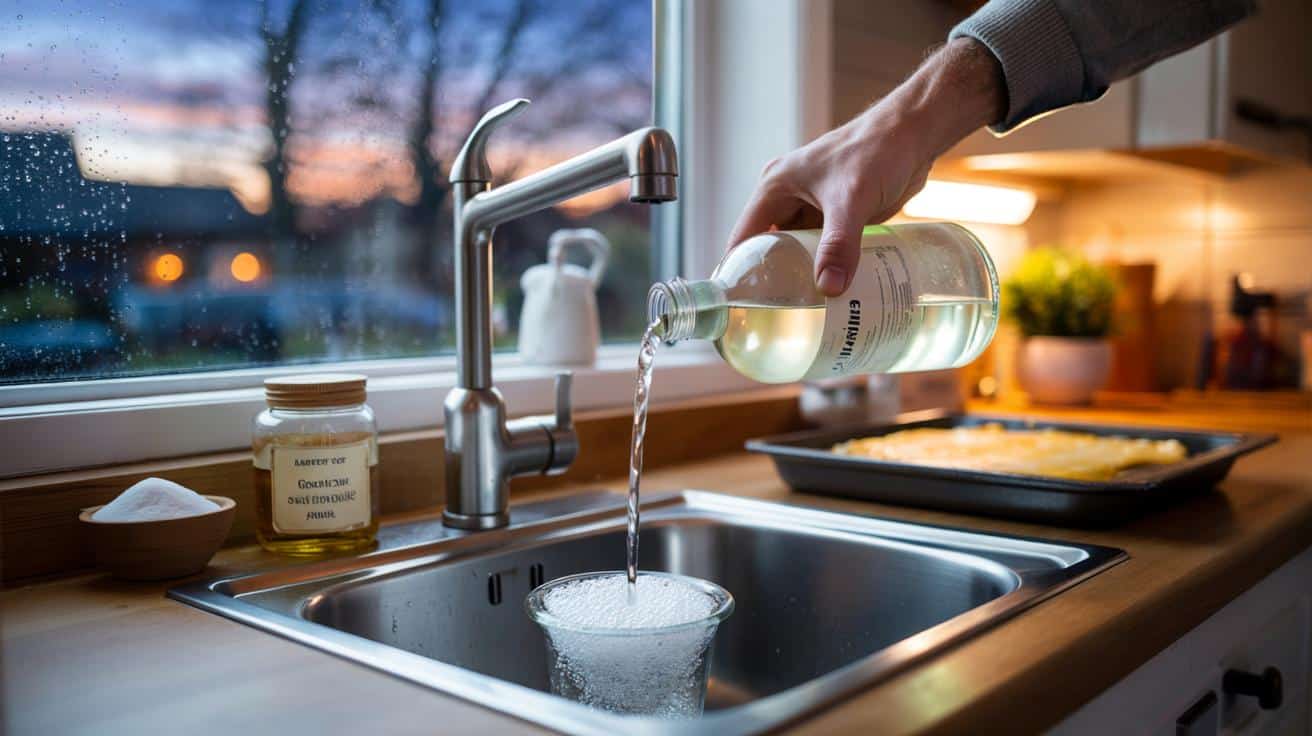
Cold pipes, heavy cooking, and closed-up homes are the perfect storm for smells and slow sinks — and a pantry bottle could be the simplest reset.
The first chill of November has a way of trapping kitchen life indoors. Kettle steaming, windows fogging, the Sunday roast resting while someone pokes at a sluggish plughole that’s started to gurgle like a sleepy radiator. In one North London flat, a neighbour leans over the worktop with a conspiratorial tip: “White vinegar. Pour it in and walk away.” She swears by it. No gadgets, no fuss, just the sharp nip of a clean you can hear, then smell, then feel in the way water drains with purpose again. She learned it after a pre-Christmas panic a few years back, when the sink staged a rebellion between gravy and gingerbread. This time of year breeds those tiny domestic dramas. A 30p bottle can save your winter.
Why vinegar, and why November?
As temperatures dip, grease from roasting tins and soapy residues cool quickly, clinging to the insides of pipes like a winter coat. That film builds, catching stray crumbs and hair, and a slow drain soon follows. Central heating hums, windows stay shut, odours linger. White vinegar steps in with a simple edge: mild acidity that cuts through limescale, disrupts biofilm, and neutralises smells without harsh chemicals. It won’t chew through a solid blockage, but it helps keep the everyday gunk from turning into a crisis.
Ask anyone who’s spent a Saturday with a plunger. A Leeds plumber told me he can guess the week before Christmas by the calls alone: rich gravies, meat fats, and porridge-thick sink pipes. He keeps a bottle of white vinegar and a tub of bicarbonate of soda on his van for gentle maintenance jobs — not because it’s magic, but because it’s easy for people to repeat after he’s gone. We’ve all had that moment when guests are due, candles are lit, and the kitchen suddenly smells like damp dishcloth. The quick vinegar flush is a dependable reset.
Vinegar is mostly water with about 5% acetic acid. That’s enough to dissolve light mineral deposits, break up the slimy matrix that odour‑causing bacteria live in, and help rinse away soap scum. Pair it with hot water and the mechanical rush clears loosened debris. Add bicarbonate of soda and you get fizz — not a “chemical cleaner” in the industrial sense, more a gentle agitation that nudges residue off the pipe walls. It’s kind on most modern plumbing, kinder on septic systems than bleach, and much less risky for traps and seals than aggressive drain openers.
The ten-minute vinegar flush
Start with heat. Boil a kettle, then let it sit for a few minutes so it’s hot but not raging. Pour it slowly down the plughole to warm the pipe and soften fats. Next, sprinkle about 100g of bicarbonate of soda into the drain. Follow with 250–300ml of white distilled vinegar. It’ll fizz like a tiny storm — that’s your cue to leave it alone for 30–40 minutes. Finish with another flush of hot water. Do this on a quiet evening, when the sink can rest for a bit. For a lighter routine, pour 250ml vinegar alone once a week between big cleans.
A few gentle rules keep it safe. Use white distilled vinegar, not the brown malt you splash on chips. Keep the hot water hot, not boiling straight from the kettle if you’ve got lots of PVC. Skip vinegar entirely if you’ve used a commercial drain cleaner in the last 48 hours. And if water is already standing for hours, call a pro — that’s a job for rods, not the pantry. Let’s be honest: nobody does this every week. Even once this month already puts you ahead of the winter curve.
Think of this as maintenance, not wizardry. A veteran London plumber told me one thing matters more than any trick: control what goes in.
“Vinegar helps with odours and light build‑up, but the real win is keeping fats and food out of pipes. Catch it before it sticks.”
Try this simple checklist to know when to act:
- A faint eggy whiff when the tap runs.
- Gurgling after the sink empties.
- Fruit flies nosing around the plughole.
- After a heavy cooking day — roasts, stews, frying.
Keep a cheap bottle under the sink. **A ten‑minute routine beats a December panic.**
The bigger picture: small habit, winter payoff
November is when homes close up and kitchens work harder. Little rituals, done now, ripple outward — clearer drains, fresher rooms, fewer call‑outs on the very weekends you’d rather be stringing lights. *It’s a small, oddly satisfying ritual.* You pour, you wait, you listen to the fizz and feel like the house is breathing again. There’s also a civic angle: water companies have spent years wrestling fatbergs the size of vans. Anything that keeps grease from setting in domestic pipes is a kindness to the network beyond your garden gate. Share the idea with a neighbour, swap a jar for the turkey fat, pass on a short how‑to. The bottle costs pennies. The peace of mind is worth far more.
| Point clé | Détail | Intérêt pour le lecteur |
|---|---|---|
| Use white distilled vinegar | Mild acidity, no colourants, no sticky residues | Cleaner result, no lingering “chip shop” smell |
| Heat helps first | Warm pipes and soften fats before vinegar | Better flush, fewer slowdowns after heavy cooking |
| Never mix with bleach | Combining creates toxic fumes | Safety and peace of mind during routine cleaning |
FAQ :
- Can I use malt or apple cider vinegar instead?Stick to white distilled vinegar. It’s clear, cheap, and leaves fewer traces in plastic traps and seals.
- How often should I do the vinegar flush?Monthly is a solid baseline. After heavy cooking weekends, add an extra quick pour.
- Will vinegar unblock a fully clogged drain?No. It’s maintenance, not a rescue. If water sits and won’t shift, you need mechanical clearing or a professional.
- Is it safe with a septic tank?Yes in moderation. Small, occasional doses are friendlier than harsh cleaners. Don’t overdo it daily.
- Can I pour boiling water straight from the kettle?For metal pipes, usually fine. For PVC, let it cool a touch or use hot tap water to avoid stressing joints.
One last nudge before you open the spice cupboard for winter dinners: **never mix vinegar with bleach** or any drain opener — leave a day or two between products. Catch fats in a jar, wipe pans with a paper towel, then try a simple vinegar routine as the weeks turn colder. **White vinegar, not malt**, a bit of patience, and a hot rinse. Your pipes will thank you, and so will your future self when December gets busy.







Weekly vinegar flush = fewer smells. Bookmarked.
This actually worked on my slow sink last night—thanks! I used white vinigar, a sprinkle of bicarb, and hot (not boiling) water as reccomended. The gurgle’s gone.